
Infrared Saunas and How They Heat the Body
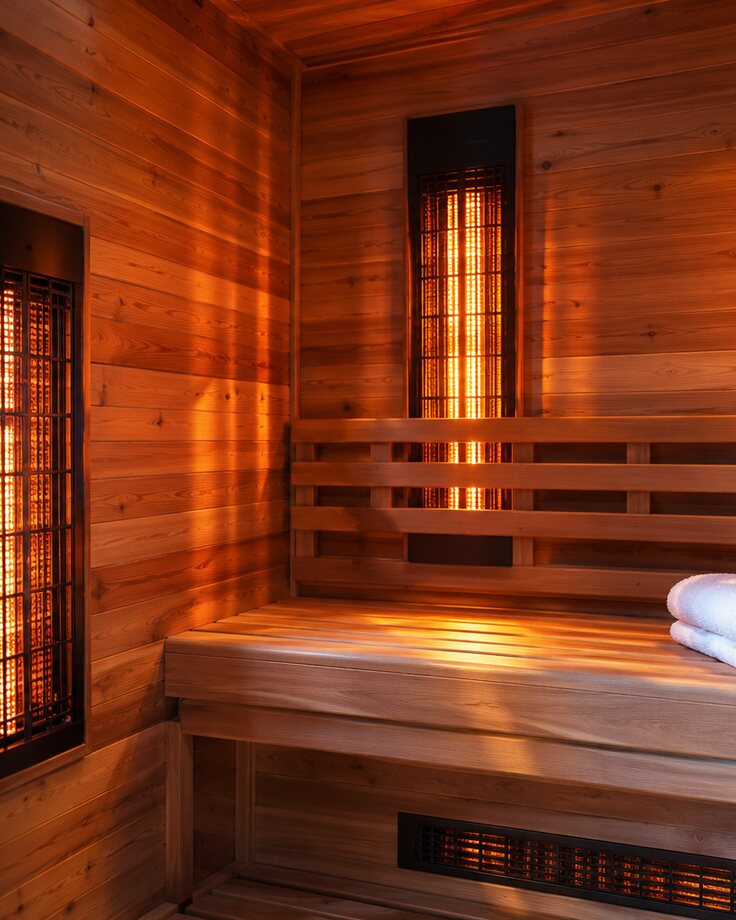
How an infrared sauna makes heat is one question. What it is said to do for you is a separate one, and the gap between them is where a claim needs a source. The page at health.clevelandclinic.org describes the hardware this way: "As the name suggests, infrared saunas use infrared lamps or panels to generate radiant heat." That settles how the heat is produced. It does not show that any health benefit follows from it.
Readers in Havertown who are weighing a sauna package can use this page as a map. Each piece below takes one claim and sets it against what independent sources say.
What each piece tests
- Infrared sauna temperatures compared with traditional saunas tests the claim that the kind of heat changes how hot the room runs.
- Who should skip the sauna tests the assumption that a session suits everyone who books one.
- Shorter, more frequent sauna sessions tests what a package should say about how long and how often to sit.
- What a sauna does to heart rate tests the claim that heat is easy on the heart.
- Where the strongest sauna evidence comes from tests how far a single study can carry a sales pitch.
Where the evidence stays thin or mixed
Treat any benefit that arrives without a named source as unsettled until you find one. When a provider cites research, ask whether the study tested an infrared sauna or a traditional one. The answer changes how much the result tells you about the session you would buy.
Heat is also only half of the recovery pitch. For the cold side, WebMD's article asking whether extreme cold can improve your health gives a plain description, and the cold therapy guide here sets the claims against sources.
Sleep and recovery claims
Some sauna packages are pitched alongside better rest. If yours is, compare the promise with the CDC's sleep overview and with what NHLBI, NIH says about sleep deprivation and deficiency. A sauna session is one habit among many, and a fair claim says so.
For a view of cold exposure after exercise, Cleveland Clinic's article on the benefits of whole-body cryotherapy after a workout is useful to read next to any heat-based pitch.
Start with the second opinion
If you read one piece first, read where the strongest sauna evidence comes from. It gives you the question to ask a provider before the others do.